Getting up at 5 am to see how many different bird species you can see might not be everyone’s idea of a thrilling morning. But what if you add the risk of stepping on a landmine? Sound like an adventure yet?
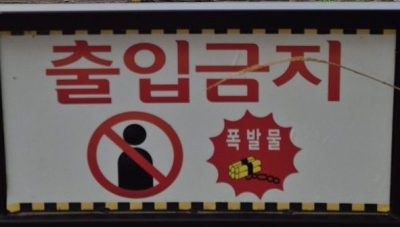
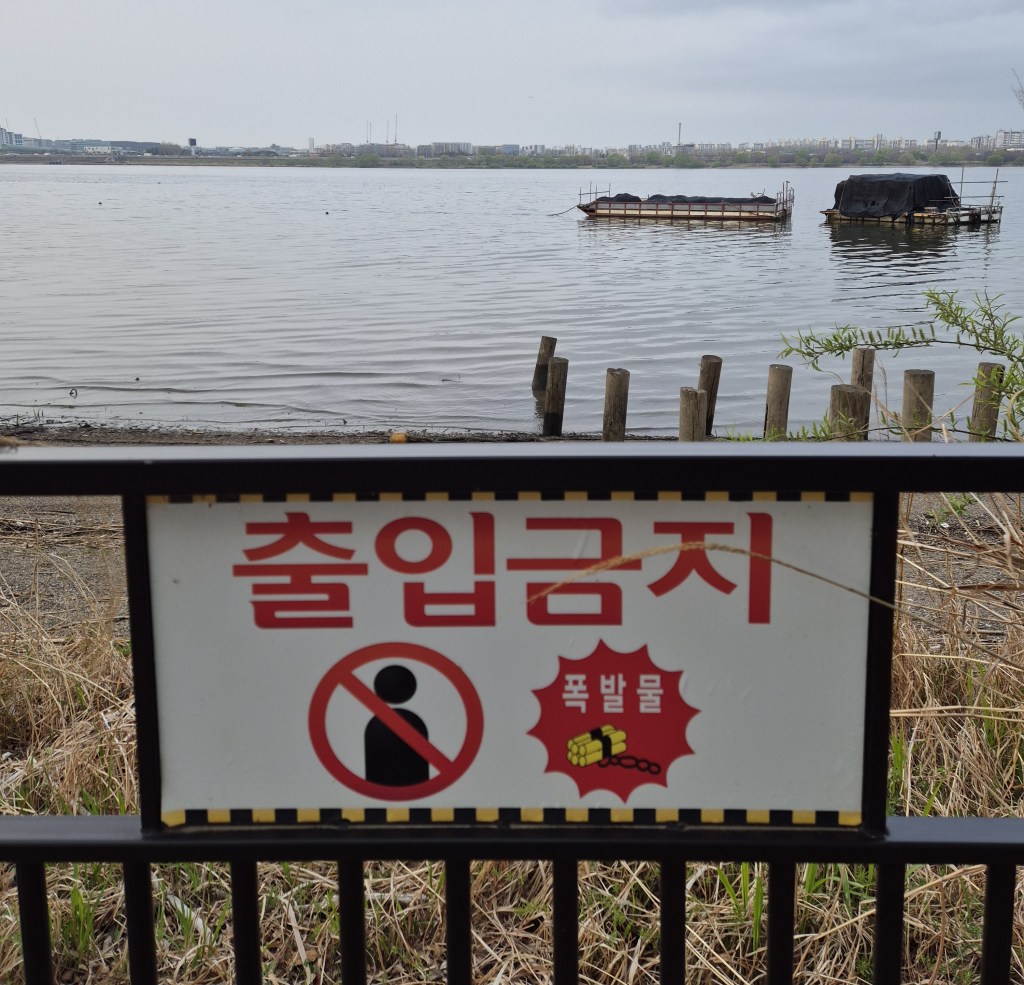
Many expats in South Korea will attest that Koreans can be sticklers for rules, and that safety regulations in public spaces sometimes verge on the ridiculous. That’s exactly what I thought when I saw a sign on the fence saying: NO ENTRY—EXPLOSIVES, and I dismissed the warnings as a classic example of Korean overprotectiveness. Granted, North and South Korea are technically still at war, and it is estimated that there are over a million landmines in the Demilitarized Zone (DMZ) separating the countries. But could there really be a risk of stepping on a Korean war-era landmine in the Greater Seoul Metropolitan area? Turns out, there could very well be.
Birdwatching Along the Han River
The Goyang Daedok Eco Park (고양대덕생태공원) on the Han River in Goyang-si, just West of Seoul, is well known among local bird watchers for its biodiversity. And the birdlife did not disappoint when I visited the park early one April morning. Among the regular eurasian magpies, large-billed crows, and grey herons that most would recognize, I also saw a few birds you wouldn’t normally associate with the bustling metropolis. Shortly after sunrise, I trekked down a narrow, muddy trail leading to a floating barge tied up next to the shore. The trail is cordoned off with rope barriers and warning signs instructing visitors not to leave the designated path. To my right, I spot a common kestrel hanging roughly 5m in the air, flapping his wings to stay in place as he surveys the reedbed below for any sign of breakfast. Further off, behind the reeds, I hear the squawking call of a ring-necked pheasant—a sound I associate more with rural farmlands than the landscaped urban parks along the Han River.
I explored the parks’ meandering trails and picnic spots, ticking off veinous-throated parrotbills, a great spotted woodpecker, and picking out a northern shoveler among a flock of mallards. I even added one lifer* to my list—a great crested grebe. Most ordinary observers might mistake this waterbird for a duck, if not for its long neck, pointed beak, and punk rock hairstyle. All in all, I logged 23 bird species—not at all bad for two hours of birdwatching in one of the biggest cities in Asia. So what’s with all the explosive warnings?
Landmines Along Seoul’s Waterways
When I got home and sat down for breakfast and coffee, I looked up some Korean news articles to see how dangerous my morning excursion really was. It turns out that over the last five years, there have been at least two dangerous incidents involving landmines along the Han River.
In 2020, a 70-year-old fisherman was injured when a landmine exploded under his camping chair. The incident occurred further down the river, near Gimpo Bridge, in an area that was first opened to the public in 2014. Fortunately, the man’s injuries were not too serious, and he made a full recovery. Following this accident, the Korean military launched a large-scale operation to remove landmines along the Han River. During this operation, two M14 personnel mines were recovered from the Daedok Eco Park area. M14 mines are lightweight, and according to experts in the Korean military, they can easily get dislodged from the soil after heavy rains. At the time, it was presumed that these mines were carried downstream from the DMZ and ended up in the wetlands along the Han River parks in Goyang. M14 mines are also made almost entirely from plastic, making them extremely difficult to find with metal detectors.
In 2021, another tragic incident occurred when a 50-year-old man lost his foot in another landmine explosion. The man was helping to clear invasive plants from the Janghang Wetland Park when the explosive detonated. Following these incidents, the Goyang city council and Korean military worked hard to ensure the safety of the Han River parks, and thankfully, there have been no incidents since.
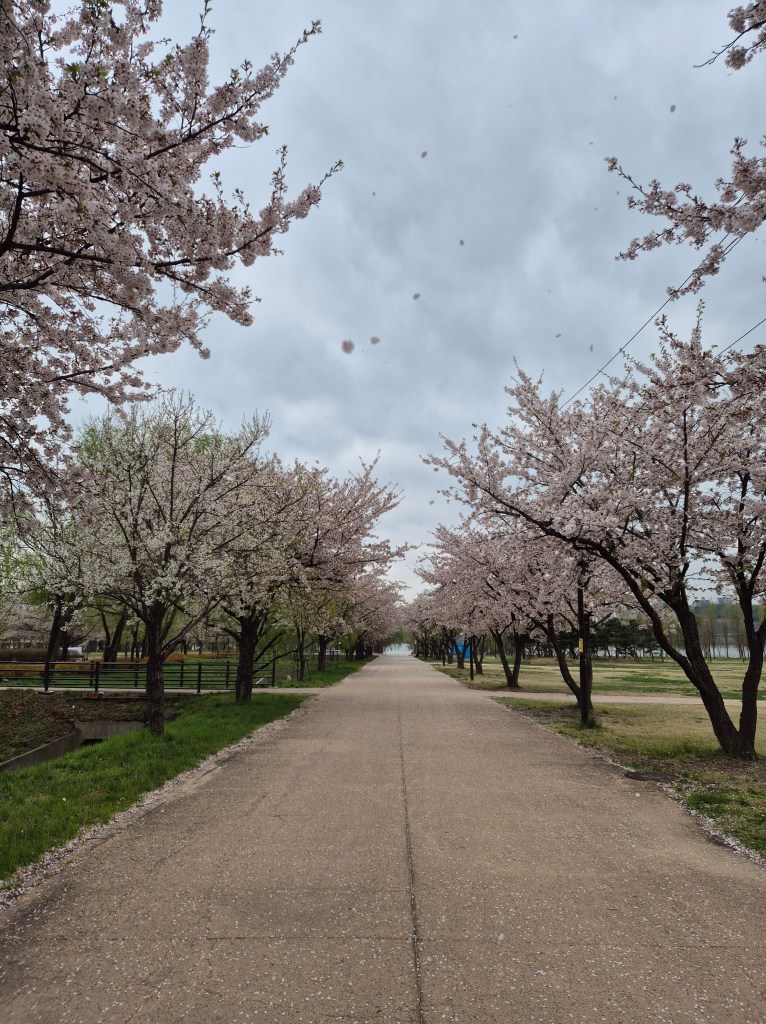
The ecological parks in Goyang, like the Daedok Eco Park and the Janghang Wetland Park, are excellent destinations for a bike ride, a picnic, or a bird-watching walk. Janghang especially has the largest willow-tree colony in Korea, and tens of thousands of migratory birds, including the national bird of Korea, the red-crowned crane, visit there in winter. When you do visit though, remember not to go chasing lifers off the trail. Stick to the well-maintained paths and respect the warning signs.
*Lifer: A birdwatching term for a bird you haven’t seen before and thus haven’t added to your life list. E.g., “Oh, look, a great crested grebe. That’s a lifer for me!”
Note: Landmines are a real threat in South Korea, especially around the DMZ, Seoul, and Gyeonggi-do. Since April 2024, North Korea has intensified its efforts to plant mines along the DMZ, without much regard for where the mines end up. These mines are easily dislodged by heavy rainfall and can end up in rivers and streams. North Korea has also been known to use small landmines and to disguise explosive devices to resemble natural objects. When hiking or walking in Korea, it is best to stay on the designated trails and avoid touching or approaching any suspicious objects.
 From Where I Stand